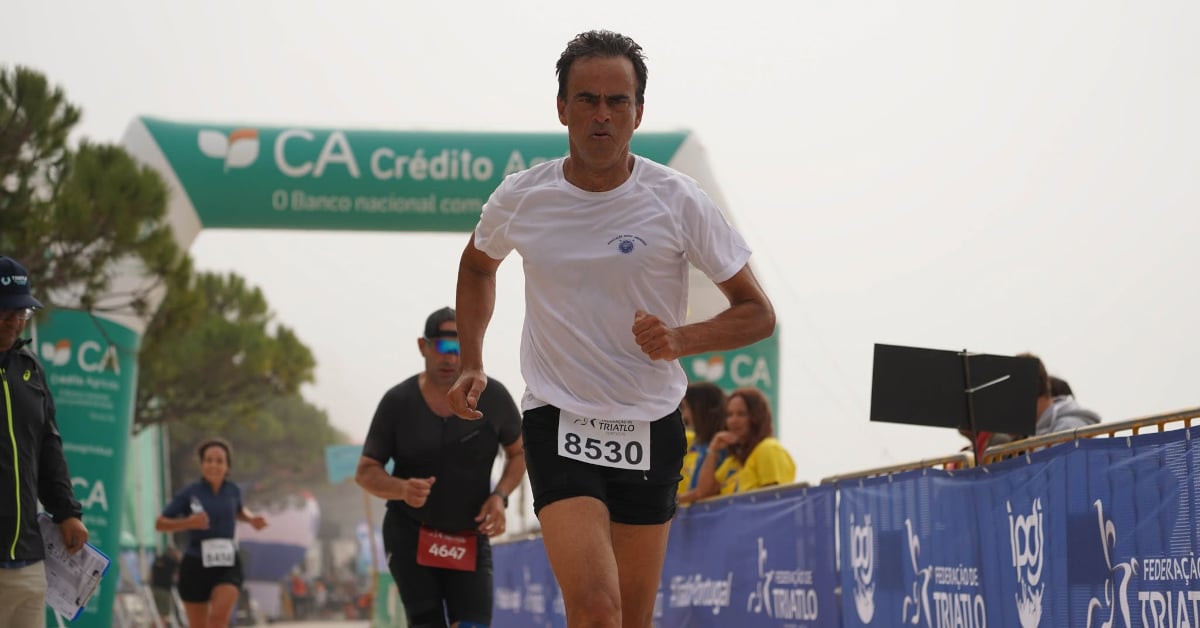
I'm sometimes referred to as the "father of Portuguese triathlon."
I never quite knew what to do with the title. First, because a sport is never born from a single person. Second, because, looking back, what we did more than 40 years ago seems much less to do with fatherhood and more to do with curiosity, enthusiasm, a certain recklessness typical of being in your early twenties, and an enormous desire to make things happen.
But there is a story to tell. And perhaps it is worth telling it now, especially because the passage of time has simplified the origin of triathlon in Portugal almost down to a single date and place: Peniche, August 15, 1984.
That was where the first race took place. But the story did not begin there.
Some "Crazies" in Hawaii
In the early 80s, the sports landscape was quite different from today's. There was not yet this multiplication of ultramarathons, trails, raids, adventure races, Ironmans, and increasingly improbable challenges. Sport was very compartmentalized: those who swam, swam; those who ran, ran; those who rode a bike, rode a bike.
And then there was news of some guys who did all three things in a row.
The adventure started by a group of Americans in Hawaii, in 1978, was beginning to attract the attention of the media. In Europe, too, from 1981 onwards, some similar experiments appeared, and in 1982, I learned about the Nice Triathlon.
I was immediately fascinated.
Not so much by the "extreme" dimension of it — an expression that, by the way, had not yet acquired the commercial meaning of today —, but by the eclecticism. There was a balance in that combination of swimming, cycling, and running that attracted me. Instead of absolute specialization in a single gesture, the challenge was to adapt the body to three different forms of effort.
I then began to look for everything I could find about that new sport and to establish contacts with European and American associations and organizers.
It is worth remembering that we are talking about 1982 and 1983. There was no Google, email, social networks, or even Internet available to make our lives easier. "Researching" meant magazines, newspapers, letters, phone calls, personal contacts, and a lot of persistence.
"Will some summer resort...?"
There is a delightful coincidence in this story.
In issue number 27 of Spiridon magazine, from March-April 1983, professor Mário Machado wrote about that strange sport in which someone proposed to swim 3,800 meters, pedal 224 kilometers and, as if that was not enough, run a marathon.
After writing about the Hawaii "Iron Triathlon" and a shorter distance race in Long Beach, he ended with an almost prophetic question:
"Will a summer resort pick up the sport in Portugal?"
It was not exactly a summer resort. But it was not far off.
That same year I took advantage of a trip to New York to visit the New York Road Runners Club, referenced by Mário Machado. I wanted to better understand what was happening with Triathlon in the United States and how it was starting to be organized internationally.
Triathlon USA had been created in 1982 and was launching, in 1983, its first short-distance championship.
I returned even more convinced that we had to do it in Portugal.
And I asked Mário for help.
He knew race organizers all over the country, especially municipalities, and I asked him to keep an eye out for someone available — or adventurous enough — to accept organizing the first Triathlon.
And then Peniche appeared
That was how Peniche entered the story.
Mário Machado learned that the City Council, through the head of the sports, Nuno Belo, was preparing a competition for the August 1984 city festivities, aimed essentially for the local fishermen.
The idea was curious: combining rowing in fishermen's boats, cycling, and running.
It was not a Triathlon, therefore. And Nuno Belo was not aware of the international movement that was developing around the new sport.
But almost everything necessary was there: the idea of combining different forms of effort, an available organizer and, above all, the desire to do something new.
Mário Machado put us in touch.
In the first meeting I explained to Nuno what Triathlon was, I showed him what was happening in other countries and told him that the introduction of the sport in Portugal was imminent: I was actively looking for a place to host the first race and already had some people interested.
He understood the opportunity immediately.
In mid-June 1984, two months short of the scheduled date, Peniche gave the green light.
Rowing was taken out, swimming was brought in, and the race against the clock, to organize the first Portuguese Triathlon, started.
Nuno Belo did the essential work on the ground. I provided him with all the information I had gathered about the sport and gave all possible support to the organization.
On August 15, 1984, thirty pioneers lined up at the Ribeira, in Peniche, for 400 meters of swimming, about 17 kilometers of cycling, and 8 kilometers of running.
28 made it to the end.
Paulo Carvalho, an athlete from Queluz, won. Not yet a triathlete at that time — for the simple reason that practically no one in Portugal could be.
We finally had a Triathlon.
Therefore, when it is said that Portuguese Triathlon "was born in Peniche", the phrase is true if we are referring to the first race. But it will not be entirely correct if by that we mean that everything started there, spontaneously.
Peniche was the materialization of a process that had already been ongoing since 1982-83.
And, ironically, while we were giving birth to the Portuguese Triathlon, Europe was also organizing itself: just two days after Peniche, on August 17, 1984, representatives from ten countries met in Avignon to establish the European Triathlon Union.
We were not there.
We had a good excuse.
From Peniche to Cascais — and to Rio
From then on things accelerated.
Still in 1984, the director of the Diário de Notícias newspaper learned about the Peniche experience and contacted me. The French brand Le Coq Sportif also reached out with the intention to support Triathlon in Portugal and integrate it into an international circuit. The newspaper wanted to associate itself with the organization of a major race as early as the following year.
Thus began my collaboration with the Diário de Notícias.
The result was the 1st Cascais International Triathlon, on June 29, 1985, which went on for several editions.
And suddenly what shortly before seemed like an extravagance of a few "crazies" gained momentum.
In August 1985 I was already registering Paulo Carvalho, José Mariz, and Carlos Carmino in the Rio de Janeiro International Triathlon, scheduled for September. They formed what we could call, with some historical freedom, the first unofficial national team. Participation was awarded as a prize for the results achieved in Cascais.
We did not have a federation yet.
But we already had a "national team".
A magazine for a sport that was still being born
In March 1986 I got myself into another adventure: publishing a magazine exclusively dedicated to the sport of triathlon.
It was simply called TRIATLO – Desporto para viver.
It was a significant personal effort, made possible by the support of several people, among them the designer Alfredo de Sousa, and the support of Diário de Notícias in the production.
In the first editorial we wrote that Triathlon attracted us by the combination of "PLEASURE and WILL" and by the constant "DISCOVERY and CONQUEST" of ourselves, of new spaces, and of unsuspected capabilities.
More than four decades later, I still think it was a very reasonable description.
The magazine intended to inform, naturally, but above all to encourage action, initiative, and participation.
We now needed to transform that movement of races, athletes, and enthusiasts into an organization.
The "carolas" (enthusiasts) of Estrela do Mar
The magazine ended up functioning also as a showcase and a meeting point for the small world of Portuguese Triathlon.
I began encouraging the creation of a national association and persuaded Carlos Raimundo, then a senior executive at the Oeiras City Council, to take on the presidency.
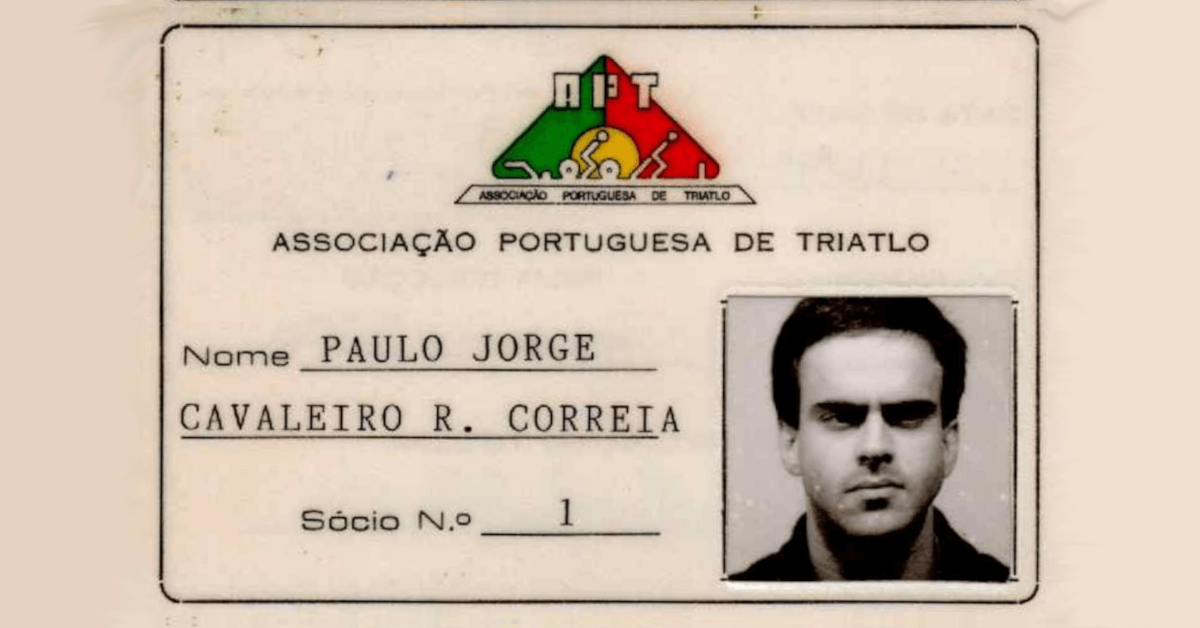
The Portuguese Triathlon Association (APT) was officially established on May 26, 1987.
I was given membership number 1, which I keep above all as a souvenir of that collective adventure.
The most faithful image of the early days of Portuguese Triathlon is perhaps not a large meeting room or a federation office.
It is a warehouse.
More precisely, the warehouse of the Estrela do Mar café-restaurant, in Carcavelos, owned by João Neves Almeida, one of the great benefactors of the sport in those early days.
That was where that group of "carolas" (enthusiasts) gathered.
Without major resources. Without professional structures. Probably with less formal meetings than any sports management manual would recommend.
But with a tremendous will to make Triathlon grow.
With the savings all the way to Finland
Meanwhile, I kept corresponding with the European leaders I had been contacting since 1983.
In 1987 I decided to take another step forward.
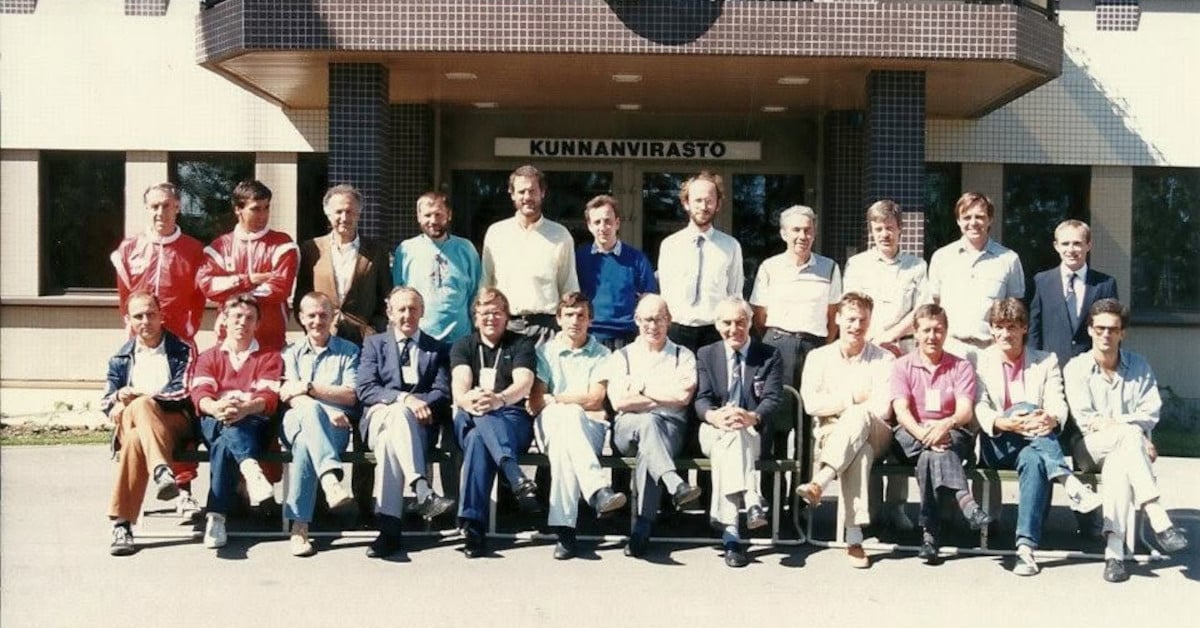
I gathered my savings and went to Joroinen, in Finland, where, alongside the European Long Distance Championship, the congress of the young European Triathlon Union was taking place.
In my luggage, I carried an ambition: to present the Portuguese bid for the organization, in Cascais, of the 1989 European Short Distance Triathlon Championship.
It was also there that I met in person, for the first time, men like Didier Lehénaff, Joop van Zanten, Con O'Callaghan, and Václav Vítovec, among other European leaders with whom I had exchanged correspondence over the years.
It is curious to think about this today.
Portugal had held its first Triathlon only three years earlier and we were already in a European meeting proposing to organize a European Championship.
Perhaps it was audacity.
Perhaps recklessness.
Fortunately, at that age, the line between the two is easily blurred.
Finally, a Federation
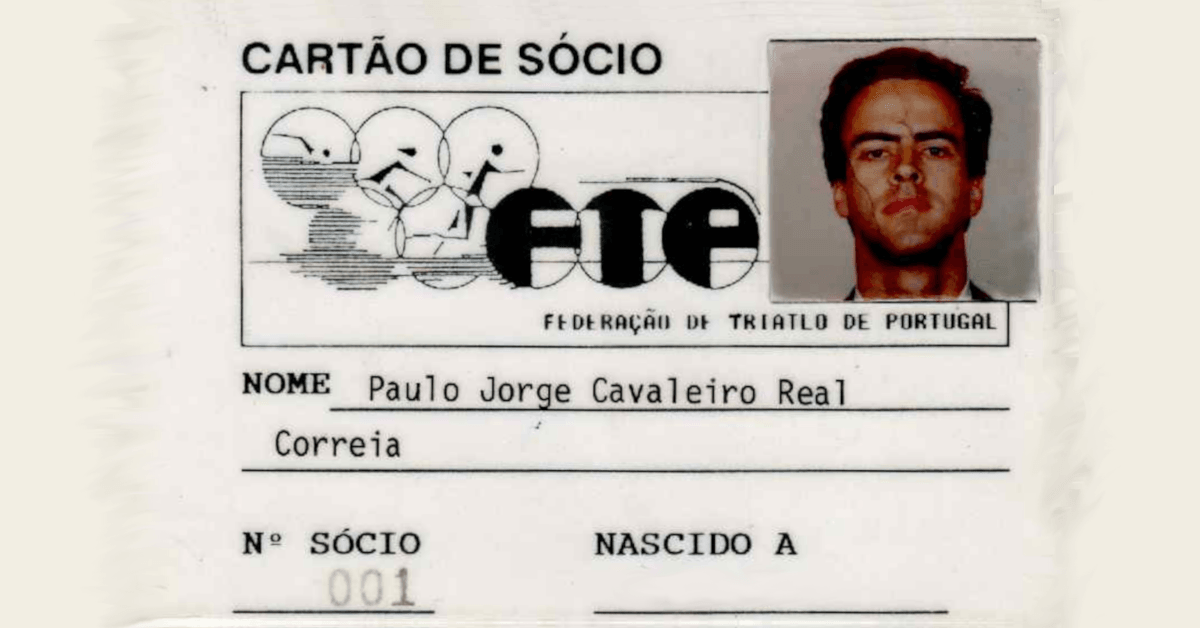
The Triathlon Federation of Portugal was constituted on October 16, 1989.
That same year, the calendar already featured 22 triathlon races, including a middle-distance event that drew around 40 participants.
In five years we had gone from 30 pioneers on a beach in Peniche to a sport with a national calendar, an association, a federation, and consolidated international relations.
And Cascais finally hosted the European Championship whose candidacy I had presented in Finland.
Its realization is a testament to the commitment of Jorge Damas, who unfortunately passed away far too soon, and whose vital role deserves to be remembered.
With the establishment of the Federation I considered, at that time, that my mission was accomplished.
I had other professional demands and it seemed to me that the time had come to just remain available to help when necessary.
The sport was already able to walk on its own legs.
Or swim, ride, and run on them.
Things did not go as smoothly as I planned. The first presidency of the Federation plunged it into serious instability and ended up in early elections. In September 1991 I was pushed — I can't find a much better word — to accept the presidency.
It was a position I left as soon as circumstances allowed.
Later, in 1995, Adriano Cunha would become President and do the important work of reformulating and consolidating the federative structure.
From then on, another story begins — much better known and which no longer needs me to be told.
In 1994, Triathlon was admitted to the Olympic Games program. In Sydney, in the year 2000, the first Olympic triathletes finally dived into the water.
For someone who, less than twenty years earlier, was sending letters to several corners of the world trying to understand how that strange sport worked, I confess it was beautiful to watch.
After all, who was the "father"?
On March 8, 1997, the General Assembly of the Federation awarded me the Diploma of Honorary Member.
It is an honor that naturally flatters me.
As for the other one, that of "father of the Portuguese Triathlon", I continue to receive it with some reservation and a smile.
If I did anything of value, perhaps it was simply recognizing an idea worth believing in early on, and finding a way to bring people together around it.
Without Mário Machado, Peniche might not have appeared at that moment. Without Nuno Belo, that August 15, 1984, would not have happened. Without the leaders of the Diário de Notícias, Cascais would hardly have grown to the dimension it did. Without Alfredo de Sousa and all those who collaborated and sponsored the magazine Triatlo, we would not have had that extraordinary tool for dissemination and aggregation. Without Carlos Raimundo, João Neves Almeida, Nelson Laranjeira, Luis Ascenso, and the other APT "carolas", the first organized structure would not have been born. Without Jorge Damas, Adriano Cunha, Artur Parreira, and so many others that I cannot list here, several following steps would not have been possible.
In short, without Dora Pinto, my companion since before those early days and my wife since she became the first national Triathlon champion, probably much of this would not have been possible either. She did not just accept this adventure: she also made it hers, and followed with availability, effort – and some panic, at times – practically all the initiatives in which I compromised our resources throughout those years.
And, above all, without those first athletes, and their families, who agreed to dive in the water, jump on a bicycle, and then run — when almost no one knew very well why on earth would anyone want to do three sports in a row — there would be no sport to organize.
Perhaps that is the part of the story I like best.
We started without knowing exactly where it would take us. There were no careers to forge, positions to be appointed, or official titles to hand out. In fact, the institutional structure did not even exist yet. There was only a new idea, a group of willing people, and the almost childlike joy of building something we believed was worth it.
In the editorial of the TRIATLO magazine, in March 1986, I wrote that that sport proposed "a new framing of the individual in their physical practice".
Nearly fifteen years later, in an article published as triathlon was preparing to make its debut at the Sydney Olympic Games, I summarized the issue in a much less solemn way, exactly as the journalist João Alves da Costa from the newspaper "A Bola" had noted regarding the 1986 Cascais Triathlon:
"You just have to try it to like it!"
Come to think of it, perhaps I still haven't found a better definition.
And that was more or less how it all began.